

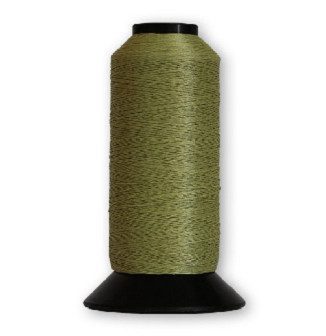
KEVLAR®/STEEL
| Articles: | 733483 - 1.900,00 yds |
| No./Tkt.: | 23 |
| tex: | 133 |
| Material: | 100% para-aramid |
| Thread Construction: | Сore spun thread |
| Recommended needle size: | NM 140-160/22-23 |
For heat-resistant seams.
For technical applications, equipment, safety shoes and clothing, filters requiring a high degree of heat resistance.
Product Benefits
- The thread has a heat resistance > 550 °C under mechanical stress.
- Good chemical resistance to mild acids and alkalis.

KEVLAR®/STEEL fire-resistant thread is a modern composite material designed for use in extremely high temperatures and high mechanical loads. It combines the unique properties of Kevlar® aramid fibers and stainless steel thread, providing not only heat resistance but also exceptional tensile strength, cut resistance, and spark resistance.
These threads are used in applications where standard sewing materials cannot withstand heat, friction, and sparks: in workwear, protective accessories, technical textiles, and industrial equipment.
Thread Composition and Structure
The combination of two components—KEVLAR® aramid fibers and stainless steel— This makes KEVLAR®/STEEL thread one of the most reliable in its class.
Kevlar® aramid gives the thread lightness and flexibility with outstanding heat resistance (up to 370°C). The material does not melt, burn, or support combustion.
The steel wire increases seam strength, improves cut and abrasion resistance, and improves electrical conductivity, which is important in antistatic products.
Thanks to this structure, the thread can withstand short-term temperature peaks up to +500°C and remains stable even during prolonged use in hot workshops or over an open flame.
Key Features and Benefits
- Flame and Heat Resistance
KEVLAR®/STEEL thread is non-flammable and non-melting. It maintains its strength when exposed to high temperatures, sparks, and flames, making it indispensable in the production of fire-resistant suits.
- Increased mechanical strength
Thanks to the combination of Kevlar and steel, the thread can withstand significant loads without breaking or stretching. This is especially important for clothing and accessories that are subject to constant friction.
- Cut and puncture resistance
The metal component makes the material resistant to mechanical damage — It is difficult to cut even with a sharp object.
- Chemical Resistance
The thread is not damaged by oils, lubricants, acids, and solvents, which expands its range of applications in industry and mechanical engineering.
- Durability
KEVLAR®/STEEL is resistant to repeated washing, ironing, and contact with hot surfaces. Products made with this thread last several times longer than standard analogs.
Where is KEVLAR®/STEEL fire-resistant thread used?
- Industrial workwear
The main area of application is sewing suits for welders, metallurgists, workers in the oil and gas and energy industries. Seams made with KEVLAR®/STEEL thread maintain their strength even when exposed to open flame.
- Fire-resistant gloves and protective accessories
Gloves reinforced with KEVLAR®/STEEL thread provide hand protection from heat and mechanical damage while maintaining dexterity and comfort.
- Automotive and aviation industry
The thread is used in the manufacture of thermal insulation shields, gaskets, belts, and interior elements where resistance to heat and vibration is required.
- Footwear and protective equipment
Used in the production of footwear for firefighters and rescue workers – In areas where conventional synthetic threads lose strength.
- Technical Textiles and Filters
KEVLAR®/STEEL thread is used to make fabrics used for protecting equipment, filtering hot gases, and making spark-protective shields.
How to Choose KEVLAR®/STEEL Thread for Production
When choosing, it is important to consider:
- The operating temperature range determines the required thread thickness and density.
- Fabric type: For dense and stiff materials, a reinforced thread with a higher percentage of steel is suitable.
- Seam type: For smooth and aesthetically pleasing seams, choose a thread with a polyurethane coating, which ensures easy gliding in the sewing machine.
- Thickness and count: Selected individually for the needle and material density.
Tip: When sewing workwear in large quantities, it’s worth running a test seam to ensure the thread is compatible with the fabric and the sewing temperature.
Advantages of Using KEVLAR®/STEEL in Production
- Maximum protection — seams will not fail when exposed to flame or hot objects.
- Reduced manufacturing defects — threads are less likely to break and slip in the sewing machine.
- Increased reliability of finished products — clothing lasts longer, retaining its original appearance.
- Compliance with safety requirements — This is especially important for companies with strict thermal protection standards.
Care and Maintenance of Products with KEVLAR®/STEEL Thread
Although the thread is resistant to high temperatures, it is recommended to follow basic care rules:
- Avoid harsh bleaches;
- Wash at a temperature not exceeding 60°C;
- Dry naturally, without direct contact with heating elements;
- Iron through a layer of fabric to preserve the fiber structure.
Following these recommendations will extend the life of the product and preserve its protective properties.
Conclusion
Flame-resistant KEVLAR®/STEEL thread is This is a professional solution for the production of workwear and protective textiles, where safety and reliability are paramount. It withstands heat, friction, chemical exposure, and repeated loads while maintaining strength and functionality. Using these threads guarantees quality and ensures that the seam will hold up even under the most extreme conditions.