

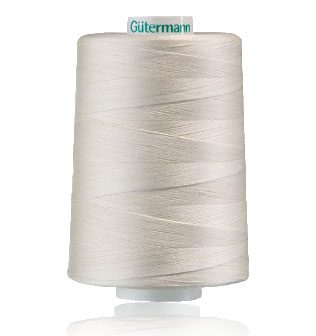
Salta K 40
| Артикул: | 703095 - 400 m |
| Артикул: | 703109 - 4.000 m |
| No./Tkt.: | 40 |
| tex: | 75 |
| dtex: | 750(3) |
| Матерiал: | 100% мета-арамід |
| Конструкція нитки: | Штапельна нитка |
| Рекомендований розмір голки: | NM 110-130/18-21 |
For heat-resistant seams.
Salta K are special yarns made from 100% aramid (DuPontTM NOMEX). Ideal for protective clothing (e.g. firefighters, metalworking, foundries), light tarpaulins and items of equipment requiring a high degree of heat resistance.
Product advantages:
- High temperature resistance
- Can be exposed to high temperatures, up to 360 ° C for short periods of time, the filament will not melt
- The thread extinguishes itself, provided it is no longer exposed to flame
- Low flammability
- Good chemical resistance to weak acids and alkalis

Workwear is more than just a uniform. It protects workers from external influences and improves comfort and safety during work. To ensure long-lasting durability and maintain its properties, the choice of threads is crucial. Threads used for sewing workwear must be resistant to wear, moisture, high temperatures, and mechanical stress. The durability and appearance of the product directly depend on their quality.
Basic Requirements for Workwear Threads
Threads used in the production of workwear must meet several criteria:
- Strength and Wear Resistance
The thread must withstand constant tension, movement, friction, and numerous washing cycles.
- Heat Resistance
Many types of workwear are ironed, dried, or even exposed to high temperatures—for example, welders’ or metalworkers’ suits.
- Chemical Resistance
Workers often come into contact with oils, fuels, detergents, and other aggressive substances. The thread should not deteriorate under these conditions.
- Elasticity and dimensional stability
The seam should remain strong but not tight. This is especially important for uniforms that require freedom of movement.
- Color fastness
Even after multiple washes, the thread should not fade or bleed, so that the garment maintains a neat appearance.
Types of threads used in sewing workwear
- Polyester (lavsan) threads
The most common type of thread for workwear. They are highly durable, resistant to moisture and chemicals, and are not subject to rot. Polyester thread does not stretch, is UV-resistant, and maintains its shape at temperatures up to +180°C.
Uses: Sewing uniforms, gowns, trousers, jackets, overalls, and gloves.
- Nylon (Polyamide) Threads
They have increased strength and elasticity. Nylon threads are well suited for dense fabrics, withstand heavy loads, and do not break when stretched.
Uses: Shoes, special bags, belts, and garments subject to tension.
- Reinforced Threads
Consist of a durable core (usually polyester) and an outer cotton or synthetic sheath. They combine softness with wear resistance and heat resistance.
Use: Uniforms for workers in manufacturing, medicine, retail, and the service sector.
- Cotton Threads
Although natural threads are inferior to synthetic ones in strength, they are used where breathability and a natural look are important. Cotton tolerates ironing and washing at high temperatures well.
Use: Gowns, shirts, medical clothing.
- Aramid Threads
High-temperature and flame-resistant threads that can withstand temperatures up to +350°C. Non-melting and fire-retardant.
Use: suits for welders, firefighters, and workers in energy and metallurgical plants.
How to choose threads for a specific type of workwear
When choosing threads, it is important to consider the type of fabric, the conditions of use, and the intended purpose of the product:
- For lightweight suits and gowns, thin polyester threads are suitable—they ensure neat seams and do not add weight to the fabric.
- For dense materials (canvas, twill, denim), it is better to use reinforced or nylon threads.
- For clothing subject to heat treatment or open flame, aramid or heat-resistant threads are required.
- For decorative elements— Colored threads with durable pigments and an antistatic coating.
It is important to select the thread thickness for a specific needle and fabric: the wrong combination can lead to breakage, skipped stitches, or seam deformation.
Benefits of using high-quality threads
Using professional threads for workwear ensures:
- durability of the product — seams do not tear, unravel, or fade;
- user safety — especially in heat-resistant and fire-resistant suits;
- aesthetic appearance — even seams and durable color last for a long time;
- reduction in production defects — High-quality thread reduces the risk of breakage while sewing;
- Savings – the higher the quality of the thread, the less often repairs or replacement of the form are required.
Tips for working with threads for workwear
- Use trusted brands – this ensures consistent quality and uniformity of winding.
- Monitor storage humidity – the threads should not dry out or become damp.
- Choose the right needle – the wrong diameter causes fiber damage.
- Check the tension in the machine – For a strong yet flexible seam.
- Test before mass production, especially when changing thread batches.
Conclusion
High-quality threads for sewing workwear are more than just a consumable; they are an essential element that determines the durability, comfort, and safety of the product. The correct choice determines how long the uniform will last without repair, whether it will retain its appearance, and whether it will withstand operational loads.
When producing workwear, it’s important to focus not only on the appearance of the fabric but also on the characteristics of the threads—after all, it’s the seam that binds all the elements of the product together. Reliable threads are the key to a professional result and confidence in every stitch.