

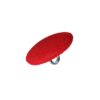
Polster
| Articles: | |
| Model: | Polster |
| Material: | Steel |
| Application: | Furniture |
| Minimum order: | 10 buttons |
| Manufacturing time: | 1-2 days |
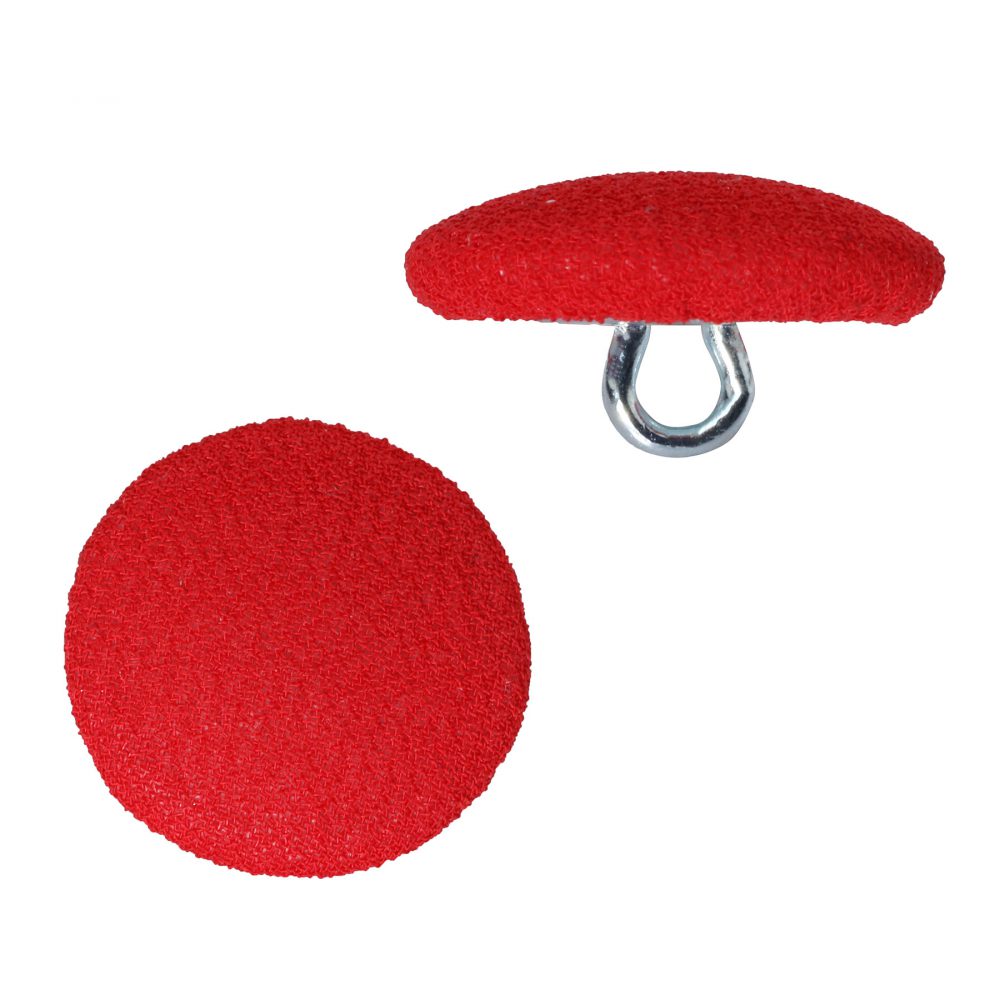
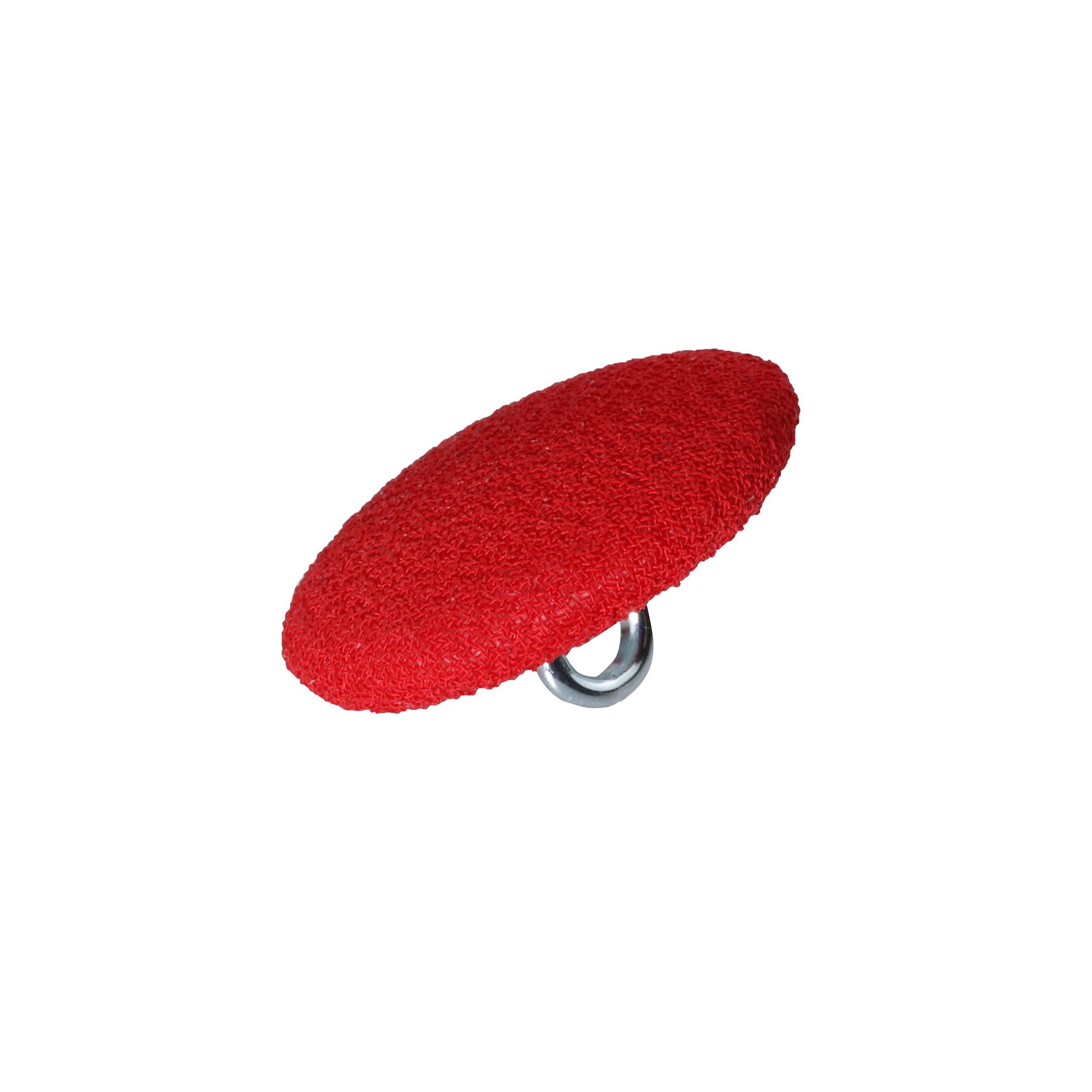
The buttons are covered with the client’s material.
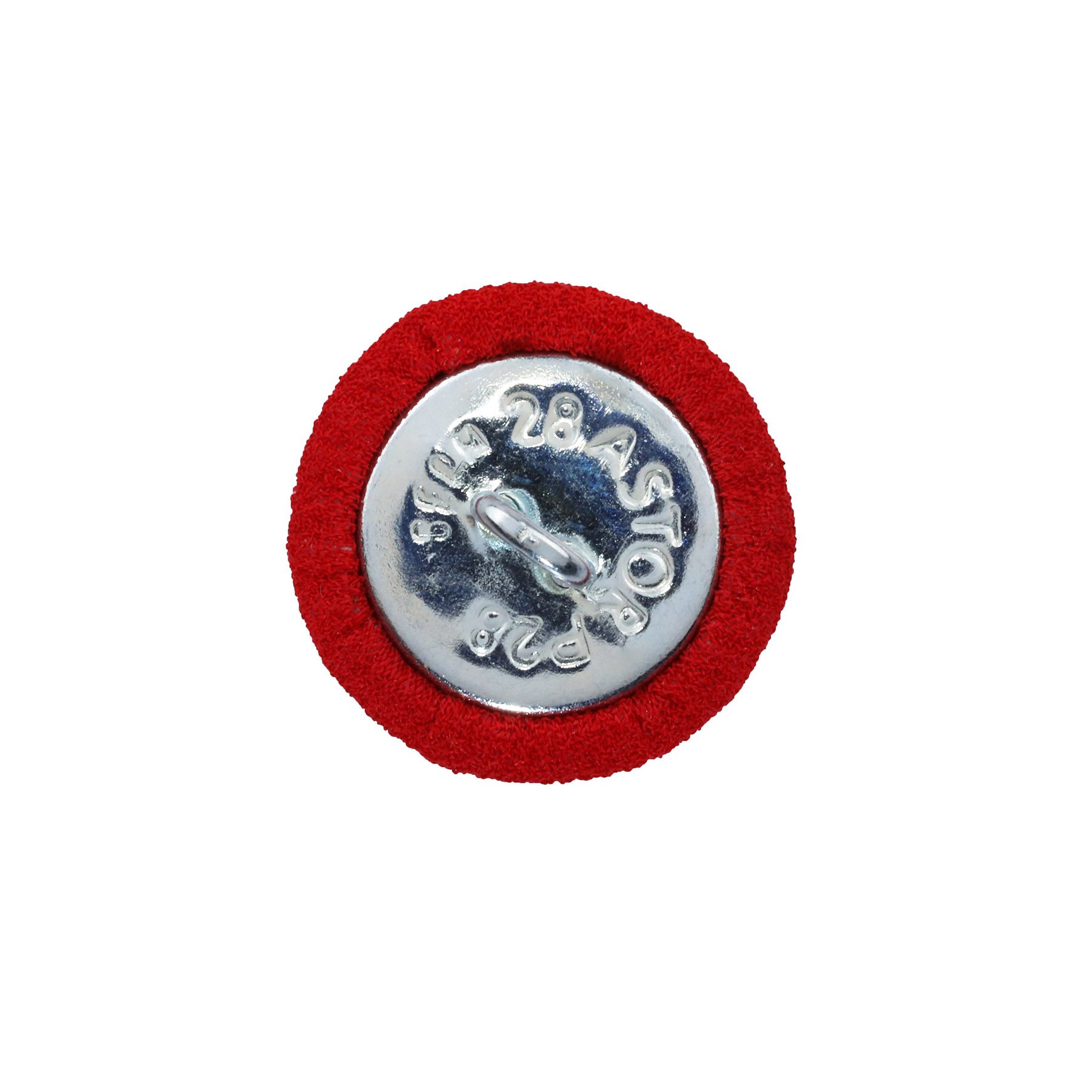
German ASTOR blanks are used for covering.
Minimum order: 10 pcs. in one form and size.
Production time: 1-2 days from the date of receipt of the material and payment.
Buttons are covered with German equipment from ASTOR.
Fabric requirements:
- Be sure to mark the wrong side
- Do not duplicate (we select the duplicating material individually and of the highest quality)
A piece of fabric for 1 button not less than 4 x 4 cm
A spare piece of fabric for a couple of buttons (just in case).
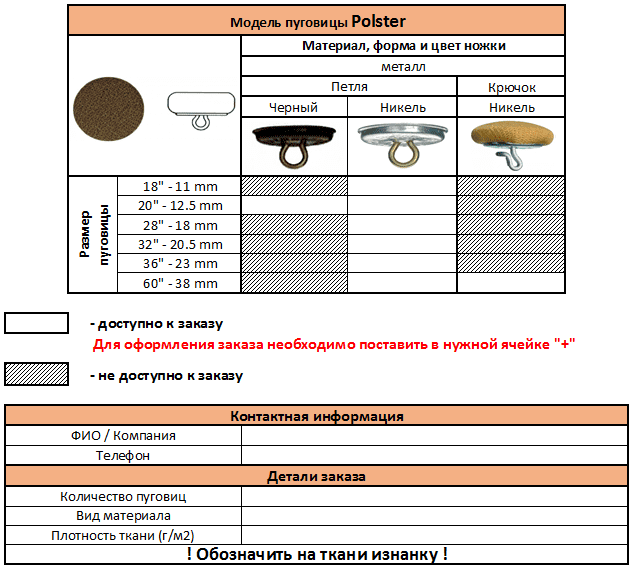
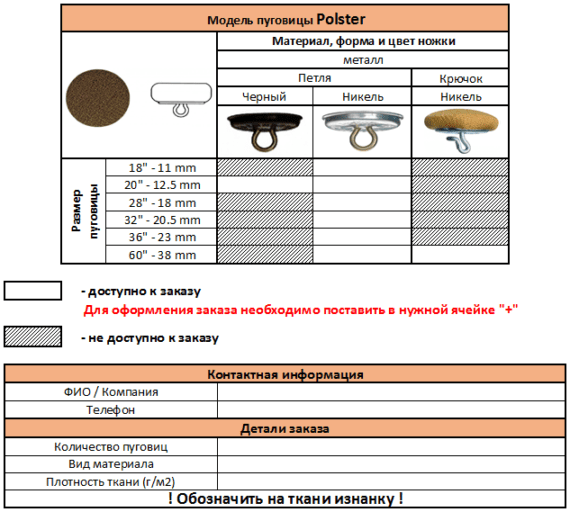
A carriage button is a decorative fastening element used in upholstery of furniture, wall panels, headrests, and interior details. It is used to create the famous “carriage” pattern—a three-dimensional diamond- or square-shaped quilting with indentations that create an elegant, raised effect.
These buttons not only secure the upholstery material but also give the product a luxurious appearance, emphasizing the texture of the fabric, the depth of the quilting, and the geometry of the composition. Carriage buttons are associated with comfort, classicism, and nobility— It’s the buttons that complete this effect.
Construction and Features
Carriage coupler buttons have a special shape and structure that differs from standard sewing models.
Their design includes:
The body (base) is usually made of plastic, metal, or wood;
The cover is the upper part, covered with the same fabric as the furniture upholstery;
The fastener is a loop, pin, screw, or thread that secures the button within the structure.
The main task is to withstand the tension of the fabric and filling when forming deep indentations. Therefore, carriage coupler buttons are always characterized by increased strength and load-bearing capacity.
Materials
Modern carriage coupler buttons are made from a variety of materials, allowing you to find the perfect option for any project—from a classic sofa to a designer panel.
- Metal Buttons
They provide strength and durability. They are used for upholstering furniture with leather, eco-leather, and dense fabrics. The metal body is resistant to deformation and loads.
- Plastic Buttons
Lightweight and versatile. Suitable for textile fabrics, velvet, velor, and suede. Plastic is corrosion-resistant and won’t deform the material.
- Wooden and plywood bases
Used in handmade furniture. They provide eco-friendliness and a comfortable, secure fit.
- Covered buttons
The most popular option. Made by hand or using special equipment: fabric identical to the upholstery material is stretched over the body. This approach creates a visually cohesive and harmonious product.
Advantages of buttons for carriage couplings
- Aesthetics and elegance
Carriage couplings create a unique visual effect. Buttons add depth and expressiveness, creating a luxurious interior accent.
- Strong Construction
Securing the fabric with buttons prevents material shifting and upholstery deformation.
- Versatility
Suitable for all types of upholstery—from leather to velvet and chenille.
- Custom Design
Customize the color, size, and upholstery material to suit your specific project.
- Ease of Installation
Installation does not require complex equipment—a needle, cord, and a sturdy base are sufficient.
Where are carriage coupler buttons used?
- Upholstered Furniture
The main areas of use are sofas, armchairs, headboards, and ottomans. Buttons create a three-dimensional relief and add a touch of sophistication to the furniture.
- Wall Panels
Carriage coupling with buttons is used in interiors for bedrooms, living rooms, studies, and restaurants. It improves sound insulation and adds coziness.
- Decorative Pillows and Accessories
Soft-covered buttons are used for pillows and decorative elements that match the furniture.
- Car and Yacht Interiors
In premium upholstery, buttons for coupling add a prestigious look to the interior and ensure a durable finish.
- Design Projects
Used in the decoration of exhibition stands, art panels, and interior installations.
How to Choose Buttons for Carriage Coupling
When choosing, it is important to consider several factors:
- Case Material – Metal for dense fabrics and leather, plastic for textiles.
- The diameter depends on the scale of the product: for furniture – 20-30 mm, for cushions and panels – 12-18 mm.
- The type of fastening is a loop, pin, screw, or thread. For furniture, a loop and pin are most often used.
- The cover is selected from the same fabric as the main upholstery to maintain the unity of the design.
- Color and style – the button can match the upholstery or be contrasting to highlight the quilting pattern.
Tip: When working with genuine leather, use buttons with a reinforced metal base – They will withstand tension and retain their shape.
Installing buttons for carriage coupling
- Marking
Points for coupling are marked on the surface of the furniture to create a symmetrical pattern.
- Preparing the holes
Using an awl or a thin drill, make holes for the cord or fastener.
- Stitching and fixing
The button is threaded through the fabric and filling, and then secured to the back of the furniture with cord, wire, or a clip.
- Forming the relief
The tension of each button should be the same so that the coupling is even and deep.
High-quality installation ensures perfect diamond geometry and durability.
Benefits for furniture makers and designers
- Enhances the decorative value of furniture;
- Speeds upholstery during mass production;
- Expands design possibilities – from classic to modern;
- Ensures product reliability and durability.
Thanks to carriage coupling buttons, even simple furniture acquires the look of a premium item.
Conclusion
A carriage coupling button is not just a fastener, but an important detail that defines the style and character of the furniture. It combines functionality and aesthetics, making the interior cozy and luxurious.
By choosing high-quality buttons that match in size, color, and material, you will ensure not only the strength of the structure but also the harmonious appearance of the entire composition. Carriage coupler buttons are the finishing touch that transforms ordinary furniture into a work of art.