


VISLON® Standard
| Articles: | VISLON® Standard |
| Zipper type: | VISLON® Zipper |
| Brand: | YKK |
| Country of Origin: | Japan |
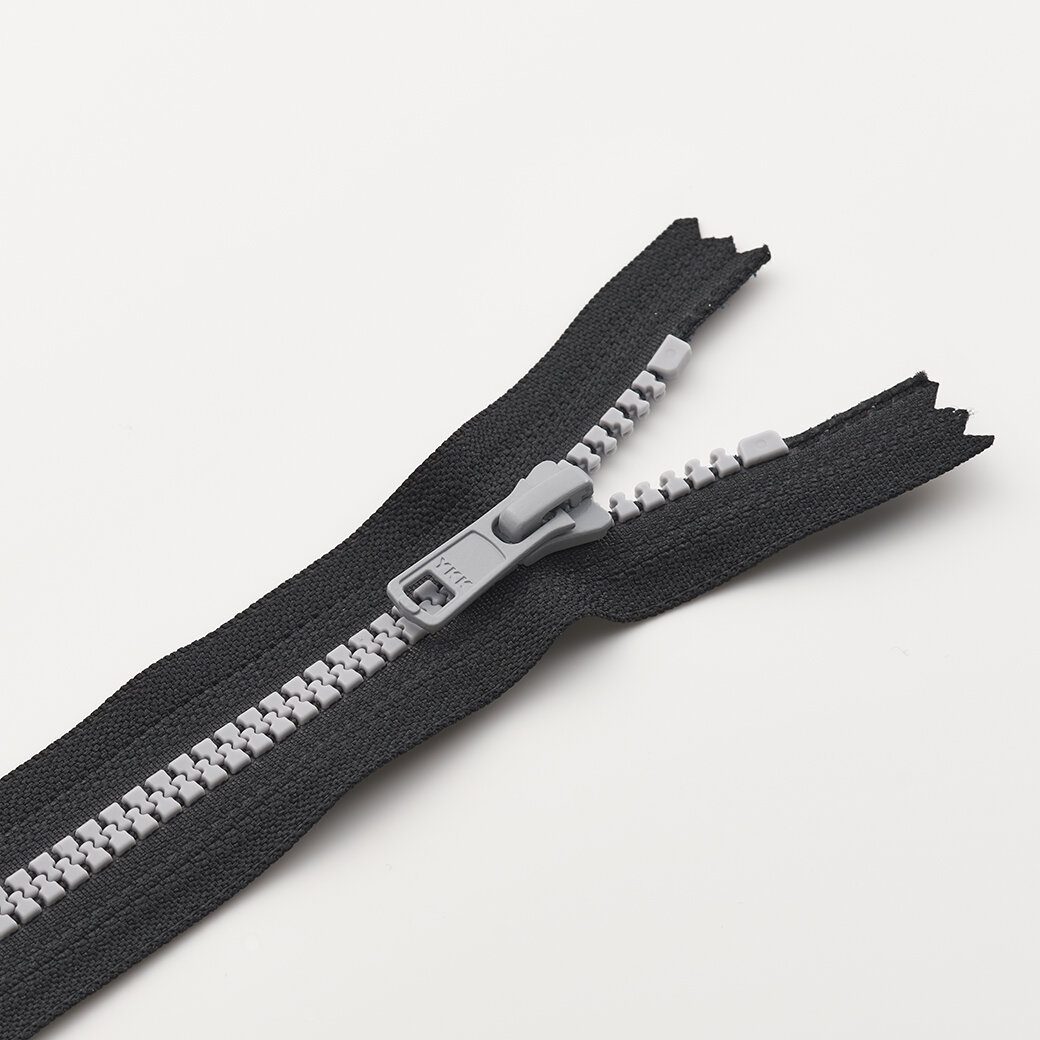
VISLON® Standard – YKK zipper is made of molded plastic elements. A tractor zipper is lighter than a metal zipper of the same size, which helps to reduce the weight of the product and maintain the strength of the zipper.
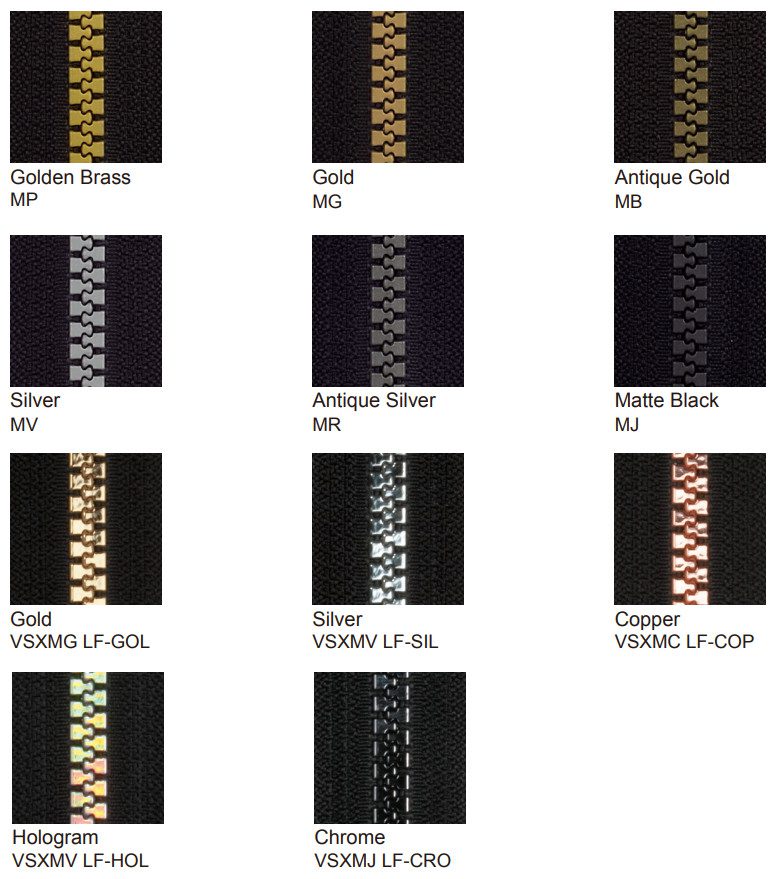
A variety of a wide palette of colors for the teeth and tape (braid) give the products a bright and memorable look.
VISLON® Standard – wherever simplicity and reliability are needed!
Application:
- Sport
- Outerwear
- Casual wear
- Uniform
- Bags
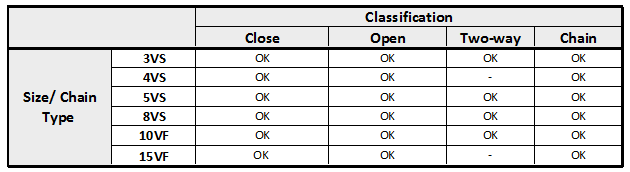
Possible colors
A roller zipper for bags and backpacks is a flexible zipper sold by the meter, not ready-made. This solution allows you to use the desired length for a specific product, without being limited to standard sizes. Thanks to its versatility, durability, and ease of use, roller zippers have become indispensable in the production of accessories, suitcases, backpacks, and bags of all sizes.
The main feature of a roller zipper is the ability to cut the desired length and install the sliders yourself. This gives the seamstress or manufacturer flexibility, savings, and a neat finish.
Construction and Materials
A roller zipper consists of three main elements:
- Tape is the fabric base to which the teeth are attached. Typically made of heavy-duty nylon or polyester that is resistant to moisture and wear.
- The teeth are the working part of the zipper. Nylon or spiral teeth are most often used for bags and backpacks, providing a smooth operation and preventing breakage when bent.
- The slider is the moving element that connects and disconnects the teeth. It can be manually adjusted to select the desired type—single, double, or locking.
Roll-up zippers are available in various widths: from 3 to 10 mm, allowing you to choose the right option for lightweight clutches, sports backpacks, or large travel bags.
Advantages of a Roll-up Zipper
Using a roll-up zipper has a number of significant advantages over ready-made fasteners:
- Economy— By purchasing a zipper on a roll, you can get a longer length at an optimal price.
- Flexibility in use — the length is tailored to the specific product, eliminating unnecessary waste.
- Ease of installation — the sliders are easy to install yourself.
- Reliability — the high-quality coil withstands tens of thousands of opening and closing cycles.
- Variety of colors and types — a wide selection of shades, coil types, and sliders allows you to find a zipper to suit any design need.
Durability and load-bearing capacity are especially important for bags and backpacks — this is why roller zippers are often used in professional sewing production.
Types of roller zippers
- Coiled zipper
The most popular option. The teeth are made of a nylon spiral sewn to the webbing. It’s lightweight, flexible, and suitable for curved items, such as backpack lids or side pockets.
- Tractor Zipper
The teeth are made of plastic. It provides a strong grip and is moisture resistant. It is used in backpacks, travel bags, and suitcases.
- Metal Zipper
The most durable, but also the heaviest type. Suitable for items where wear resistance and decorative appeal are important. Often used in urban backpacks and leather bags.
- Reverse (concealed) zipper
The teeth are located on the back side, creating a neat appearance. It is used for designer items and accessories with a minimalist aesthetic.
Where is a roller zipper used?
- Backpacks and sports bags — withstands loads and does not split under pressure.
- Travel and tourist models — resistant to vibrations and overloads.
- City and everyday bags — allows for neat and secure fasteners.
- Cosmetics bags and organizers — ensures easy opening and compactness.
- Suitcases and luggage — used for internal partitions and external compartments.
How to choose a roller zipper for bags and backpacks
To ensure long-lasting performance, consider several factors when choosing:
- Tooth type — nylon spiral is suitable for soft materials, while for dense fabrics — tractor or metal.
- Width — the wider the spiral, the stronger the clasp. For backpacks, #7-10 is typically used, for bags — #5-7.
- Webbing quality — a dense and smooth base ensures the slider moves smoothly.
- Slider type — you can choose a double-sided slider for convenience or one with a lock to prevent accidental opening.
- Color — A harmonious combination with the material gives the product a finished look.
Tip: When sewing backpacks and travel bags, it is better to use a zipper with a moisture-resistant coating or water-repellent impregnation.
How to work with a roller zipper
- Measure the desired length, leaving a small excess.
- Cut carefully to avoid damaging the teeth.
- Install the slider by moving it in a spiral until it engages easily.
- Secure the ends — You can sew or install stoppers.
- Sew the zipper to the garment using a special foot on a sewing machine.
Working with a roller zipper doesn’t require complex tools, and the result looks professional and neat.
Advantages for Manufacturers
Using roller zippers in production allows you to:
- optimize material consumption;
- create items of any length without restrictions;
- reduce the cost of finished products;
- choose a custom style and decor.
Bag and backpack manufacturers value these zippers for their reliability, flexibility, and versatility.
Conclusion
A roller zipper for bags and backpacks is a practical and functional solution for sewing accessories of any size. It combines strength, flexibility, and convenience, allowing you to create durable items with a neat appearance. Whether you’re sewing a travel backpack, a duffel bag, or a daypack, a roller zipper will provide a secure fit, ease of use, and professional quality with every fastener.